


Weston at Work Chapter 8 of 8
Who Did the Work?
Whose names are missing from the history of work?
The barn exhibit honors the people, including immigrants, people of African descent, women and children, who put Weston to work. Many left no photographs. Some left a line in the census.
A line in the census
Every ten years a census-taker walked Weston's roads and wrote down each household: names, ages, birthplaces, and work. Most of Weston's working people appear nowhere else. Here are five entries for Black men and women who worked in Weston between 1870 and 1940.
The census-takers recorded race in the words of their own time, and the pages are shown as they were written. Each card says what the census tells us, and what it doesn't.
-
Census of 1870
Eliza Cornwall
Twenty years old, born in Connecticut, living and working in the household of Bradley Hull, “Iron Manufacturer”: very likely the B. Hull of the foundry and machine shop at Valley Forge.
What we don't know: Where she came from, and what became of her.
-
Census of 1900
Isaac Anderson
Born in New York in 1830, farming in Weston on land he owned, married thirty years to Eliza.
What we don't know: Where his farm was, and what he grew.
-
Census of 1900 and 1910
Eliza Anderson
Born in New Jersey; Isaac's wife in 1900. By 1910 she was a widow running her own laundry business. The two censuses give her age differently: 58 in 1900, but 47 in 1910.
What we don't know: Who she worked for, and when Isaac died.
-
Census of 1930
Morris Howell
Forty-six, single, born in New York, living in the household where he worked.
What we don't know: Which farm, and how long he stayed in Weston.
-
Census of 1940
Maggie London and B. J. London
Both born in Georgia, both working for a private family in Weston. Five years earlier they had been living in Georgia.
What we don't know: Their full names, and why they came north.


Source: United States federal census, Weston, Connecticut, 1870, 1900, 1910, 1930 and 1940.
“3 yards of brown shirting for Cuff”
In 1828 the Town of Weston paid a store to clothe residents who couldn't clothe themselves. Its account buys brown shirting, a shirt made up and “1 pair of shoes for Cuff”. “Cuff” was a name often given to enslaved and formerly enslaved Black men in Connecticut, so this may be an early trace of a Black resident of Weston. Nothing more about him has yet been found.
The ledger, in Chapter 7 →
The Baldwins


Francis “Frank” Baldwin, son of Sylvanus and Delia Baldwin, was born about 1840. For many years he worked on the Redding farm of Julia Sanford and Dr. Annie Read, who gave him and his family a small cottage across the road from the main house.
Bruce Nelson of the Redding History Project, who has researched the family, puts it plainly: “neither Easton nor Redding were particularly friendly environments for people of color.”
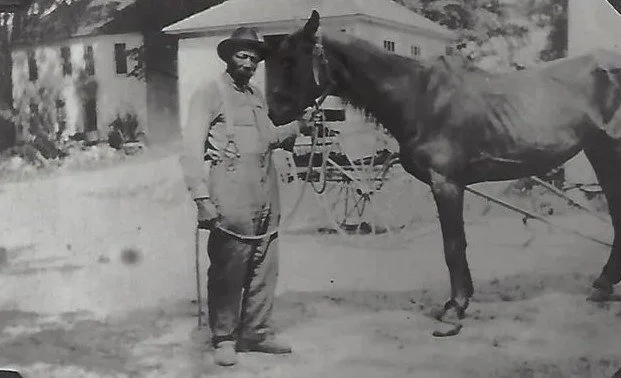
“Albert Beach Baldwin with Dr. Wakeman's horse.” Albert Beach Baldwin, of Redding Center, handled horses and drove for the town's doctors: another album caption calls it “all in a day's work”.
Working for others nearby
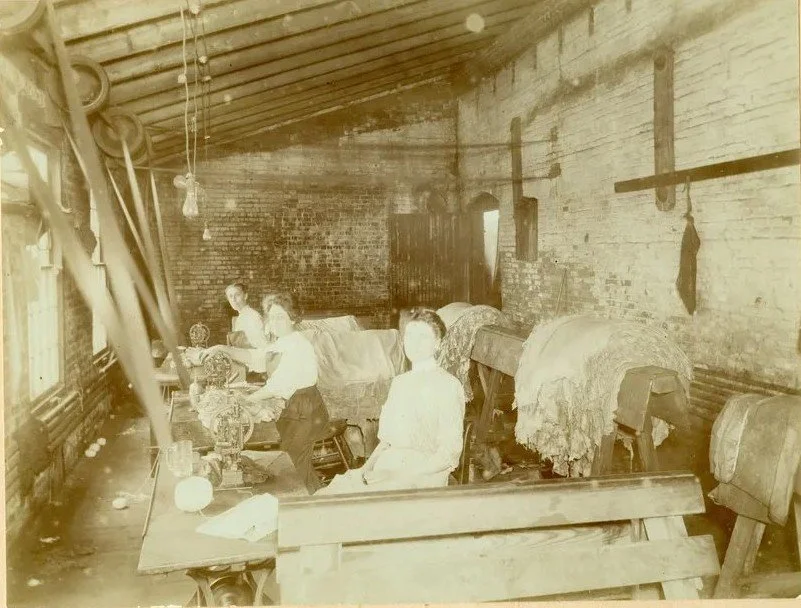
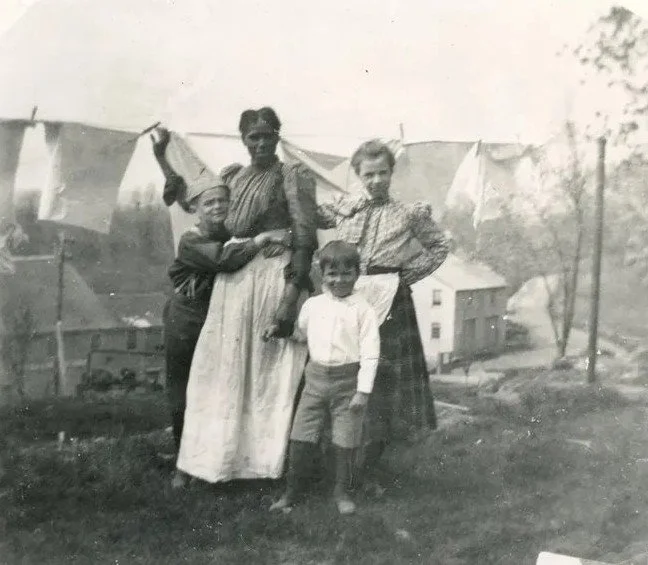
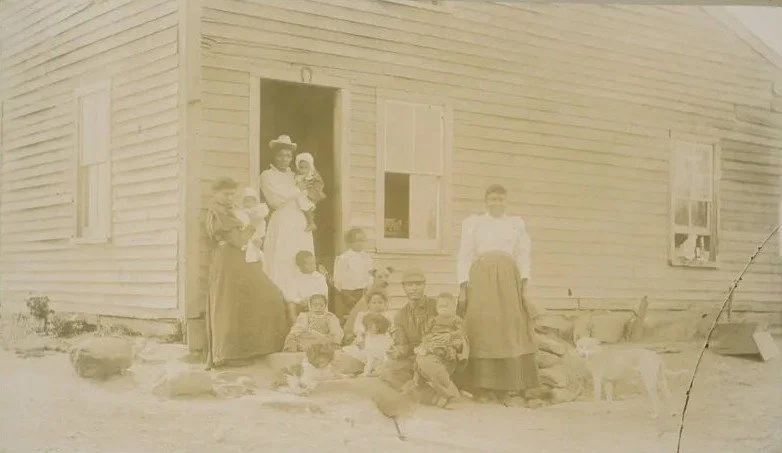
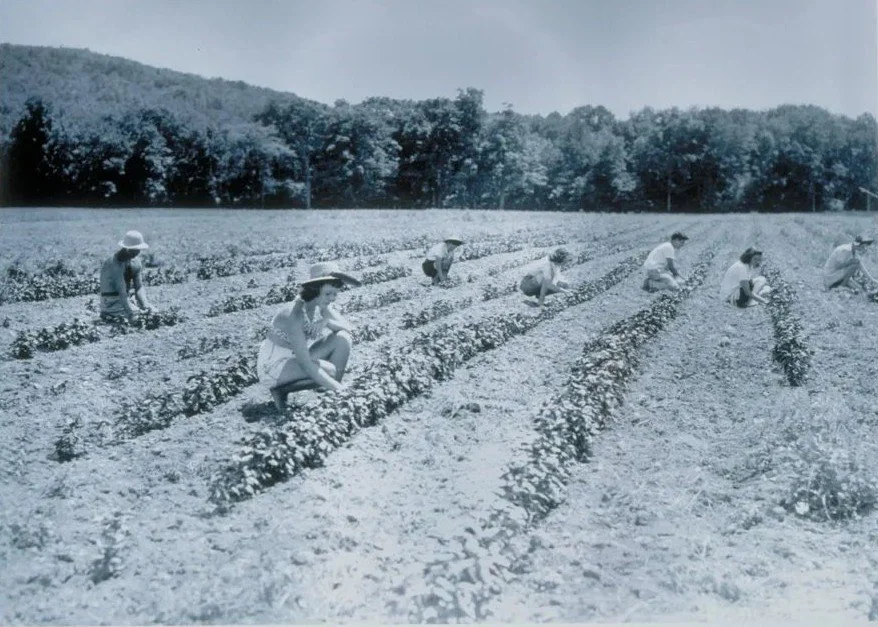
Work that wasn't paid
Much of Weston's work never reached a census line. Women ran dairies and kitchens, kept accounts and wove; children fetched, carried and sifted. Cleora Coley spent the war years with the town's farm women and on its rationing board.
Cleora's Office, in the Coley House exhibit →Still to come
More names
Photographs of Black farm workers in neighboring Redding, pictures from the Westport Museum, and the story of a widow who kept her family's farm going at the loom will join this chapter as their owners and families give their permission.
Do you know more about anyone here, or about others who worked in Weston? Tell us.
Waiting for you in the Coley Barn
- The panel on people of African descent at work in Weston
- The panels on the immigrant community around the wire mill
- The working loom, once the living of a widowed mother of four
Open Thursdays and the first and last Sundays of the month, 1–4 pm. $5 adults, $3 ages 5–17; under 5 and members free.
Plan your visit →Help
Help us find out
Many of the photographs here raise questions: who is this, where was that mill? If you know, or would like to help research, tell us.