


Weston at Work Chapter 2 of 8
Cider
Could you pay for whiskey with cider?
In the late 1800s cider was a crop, a drink, and a way to settle a debt. Two days in one farmer's diary show how.
Two days in the diary
The Center holds a diary kept on a Weston farm in 1895. Its writer doesn't give his name, but he wrote down what cider was worth.
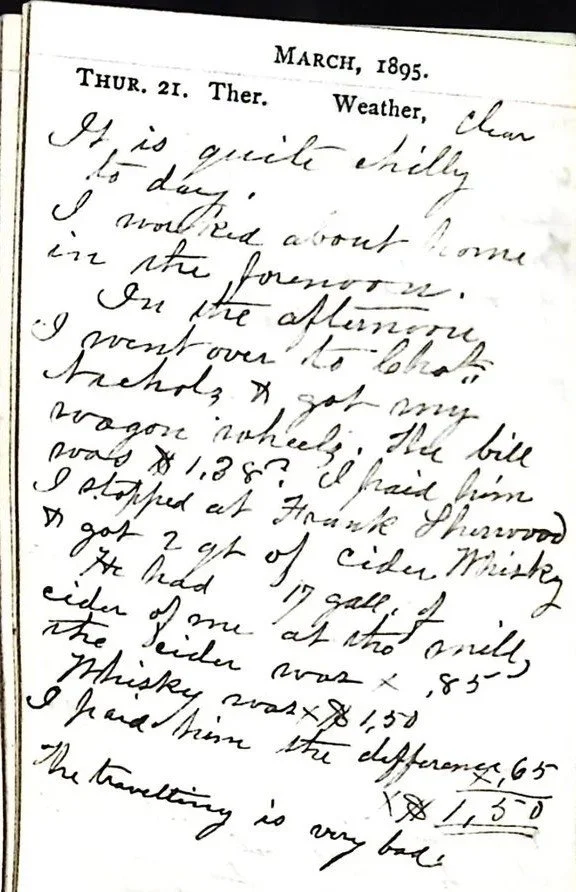
Thursday, 21 March 1895
“I stopped at Frank Sherwood & got 2 qt of cider whisky. He had 17 gall. of cider of me at the mill. The cider was .85, whisky was $1.50, I paid him the difference .65.”
And the roads: “The travelling is very bad.”
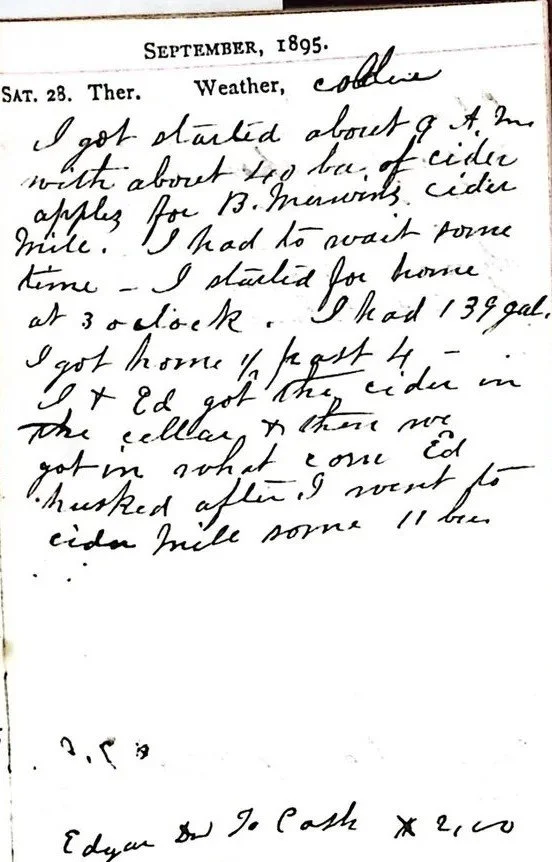
Saturday, 28 September 1895
“I got started about 9 A.M. with about 40 bu. of cider apples for B. Merwin's cider mill… I had 139 gal. I got home ½ past 4. I & Ed got the cider in the cellar.”
Then they brought in the corn Ed had husked. Who was Ed? Nobody yet knows.
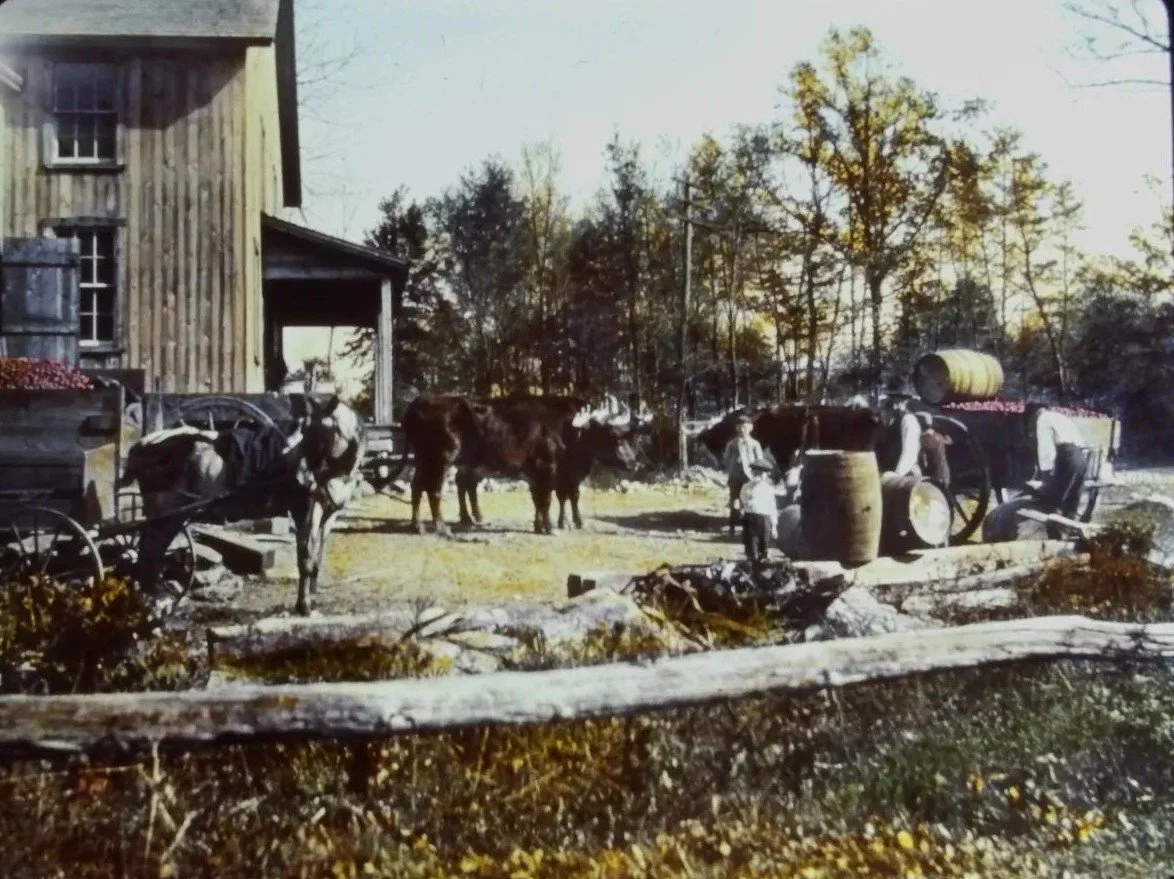
B. Merwin's cider mill
The mill at Aspetuck Corners made wooden axe and plough handles in the late 1800s. In the early 1900s Burton P. Merwin ran a cider press there, sold cider, made wooden toys, and kept a small store and an unofficial post office. He sold the mill in 1935.
The toys became the Weston Toy Company, whose sign hangs in the Coley Barn today. And the press came to the Historical Society.
The Weston Toy Company in Jimmy's Room →Your apples, your choice
It is 1895, and you farm in Weston
Make each call, then see what really happened.
-
You have cider at the mill. A neighbor, Frank Sherwood, has cider whiskey. Do you trade?
What happened: The diarist traded: Sherwood “had 17 gall. of cider of me at the mill… the cider was .85, whisky was $1.50, I paid him the difference .65.” Cider was as good as cash, nearly.
-
You have about 40 bushels of cider apples. Press them at home, or haul them to B. Merwin's cider mill?
What happened: He set off about 9 a.m. for Merwin's mill, waited his turn, and started home at 3 o'clock with 139 gallons. By evening the cider was in the cellar.
-
You run the Fitch dairy on Good Hill Road, and the neighbors are coming to help bring in the hay. How much hard cider do you lay in?
What happened: The Fitches kept seventeen barrels of hard cider for their haying bee, from 1884 until they sold the dairy about 1930.
-
The Historical Society is given a working cider press. Should it press and sell cider?
What happened: It built a shed for the press, but decided not to make cider to sell, mainly for public-health reasons.
The presses are in the barn. Come and see them.
The press comes home
The press from Merwin's mill is a Boomer & Boschert Press Co. Model No. 1, made in Syracuse, New York, about 1880. It was driven through line shafting by a White-Middleton single-cylinder gasoline engine, the kind farmers called a “one-lunger”.
The machinery and the Weston Toy Factory sign were given to the Historical Society in the fall of 1988. Volunteers raised the frame of a Cider Press Shed for them in the fall of 1992, with help from the Kiwanis Club, and finished the walls by the late spring of 1993.

Waiting for you in the Coley Barn
- The cider presses, barrels and apple crates of the cidering display
- The Crops and Production panel
- The Weston Toy Company sign, from Merwin's mill
Open Thursdays and the first and last Sundays of the month, 1–4 pm. $5 adults, $3 ages 5–17; under 5 and members free.
Plan your visit →Help
Become a member
Members visit the barn and the Coley House free, all year.