


Weston at Work Chapter 4 of 8
The Axe Works
What did thirty men make by the river?
On the Saugatuck, four miles north of Westport, the Bradleys forged axes, machetes and cane knives with water power for more than sixty years.
G. W. Bradley's Sons, Axe & Edged Tool Works
Fire-insurance surveyors drew the works in 1891 “at Weston, 4 miles N. of Westport”, between the Saugatuck and the Westport & Danbury Road. Their notes read like a time sheet:
“30 hands. Work 10 hours. No watchman. Fire pails all buildings. 4 turbine wheels.”
- hands
- hours a day
- forges
- turbine wheels
- watchmen

What's on the plan
- Forging: 14 forges and 8 power hammers
- Tempering: heat-treating the steel edges
- Wheel house: the turbines, fed by a race from the dam
- Grinding & Finishing: two storeys
- Turning
- Charcoal house and coal shed: fuel for the forges
- Lumber house, storage sheds and an office
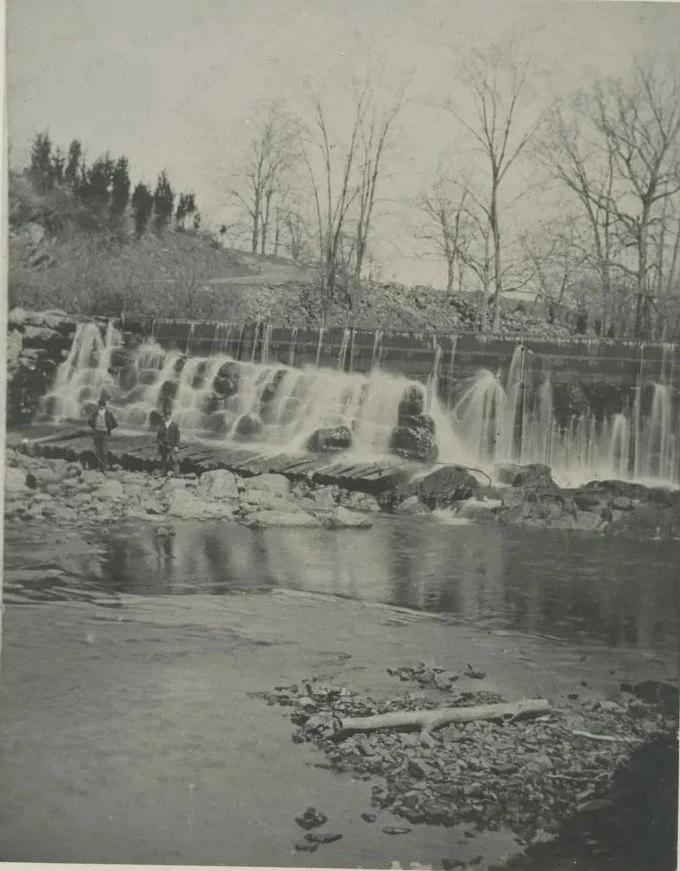
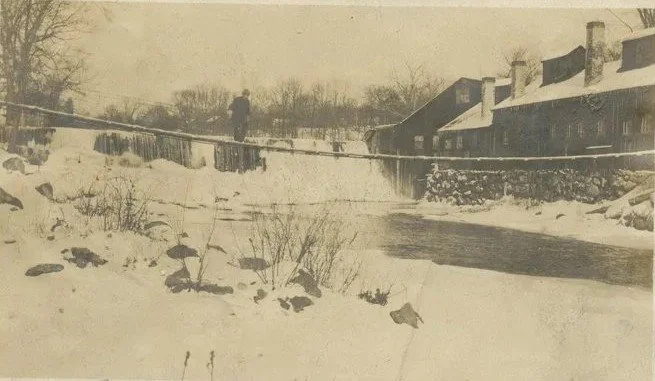
A dam held back the river. A supply race carried water to the wheel house, a tail race took it back, and a footbridge crossed the river “for workers”. The 1867 atlas of Weston shows the same place as the “Edge Tool Factory”, on its pond beside G. W. Bradley's house.
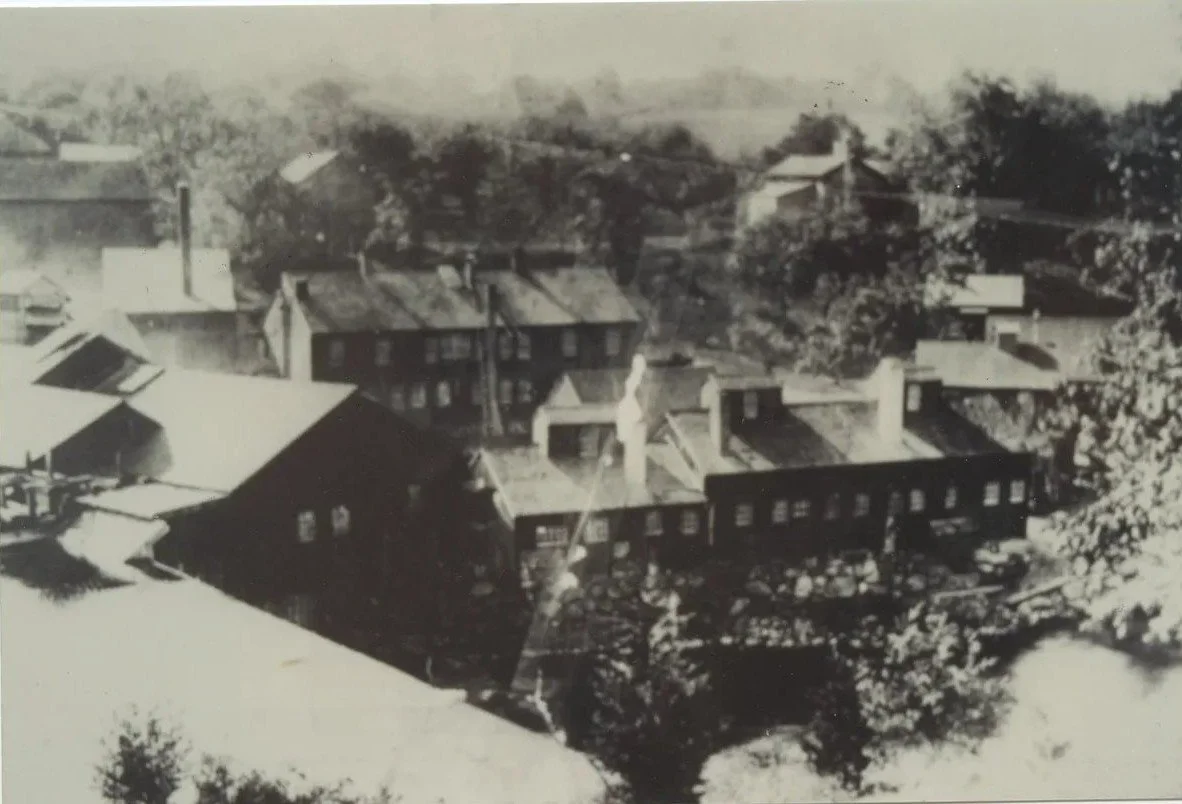
The works from above


Fifty-six years at the forge
About thirty men and boys in aprons, some holding axes and hammers: the “30 hands” of the plan. A framed copy of this photograph, in another collection, names the oldest employee: Samuel H., who started at the works at the age of 14, in 1846 or 1847, and worked there for 56 years.
That puts the works in business by the 1840s, and the photograph at about 1902 or 1903. His surname is hard to read. Do you know who he was?
What turned the hammers
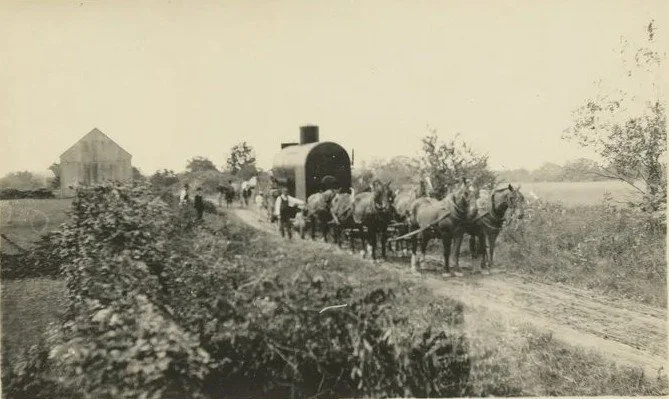
The river drove everything through four turbines and long line shafts. Then the Bradleys added steam: the key marks a Steam Engine house, and someone photographed its boiler on the road.

Machetes from Weston
The salesman's sheet shows what the works sold: machetes in a row of sizes from 21 to 30½ inches, axes, adzes, bill hooks, ring bush hooks, and brush and cane knives.
Machetes and cane knives were not for New England farms. Tools like these cleared brush and cut sugar cane, which suggests buyers far from Weston.
The sheet says C. W. Bradley, of Westport, the nearest shipping town; the 1891 plan says G. W. Bradley's Sons. The works also went by Bradley's Axe Works and the Bradley Edge Tool Company. Which was which is still being worked out.
1 May 1911
“Factory not rebuilt”
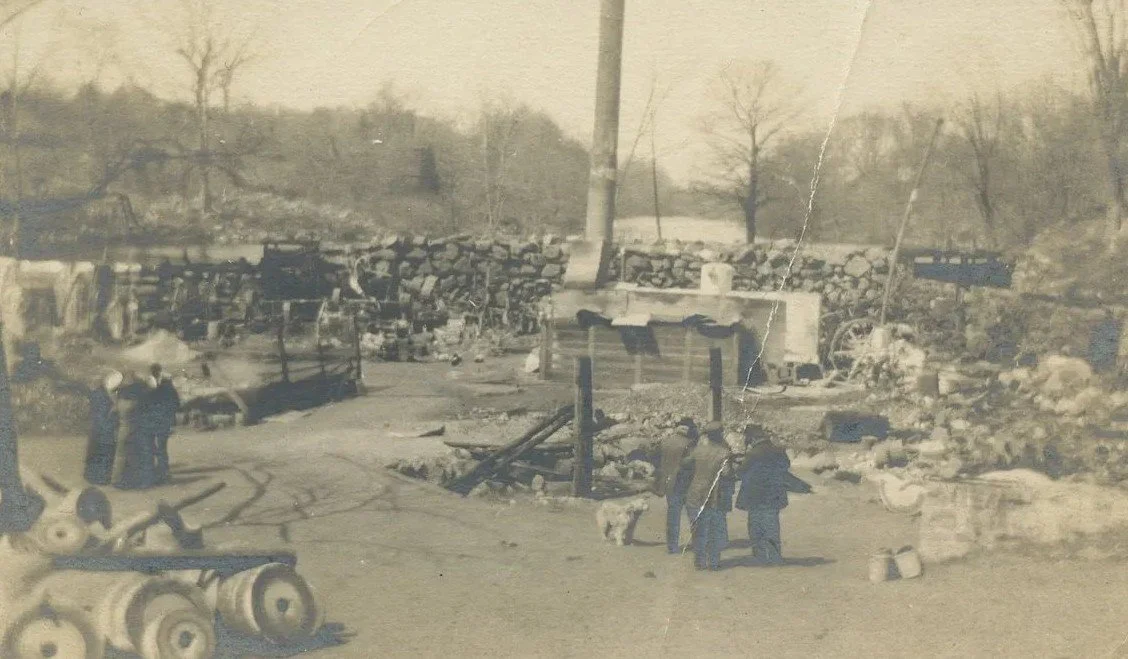
On 1 May 1911 the axe works burned. A photograph of the ruins shows a lone chimney, rubble, a boiler and a stack of grindstones. On its back someone wrote: “Axe factory after fire. Factory not rebuilt.”
Slide between the works in their working years and the morning after.
Waiting for you in the Coley Barn
- The rare Bradley axe tools themselves, forged, tempered and ground in these buildings
- The Manufacturing panel
- Farming implements of the same years
Open Thursdays and the first and last Sundays of the month, 1–4 pm. $5 adults, $3 ages 5–17; under 5 and members free.
Plan your visit →Help
Help us find out
Many of the photographs here raise questions: who is this, where was that mill? If you know, or would like to help research, tell us.