


Weston at Work Chapter 1 of 8
The Farm Year
What did a Weston farm do in a year?
Weston was farm country. Season by season, the fields, the animals and the woodlots set the work.
A farm town
Weston's farms were small, stony and mixed: a few cows and oxen, hay and grain, onions, apples and a woodlot. Clearing the fields left the stone walls that still run through the woods.
Cleora Coley remembered in 1979 that “most of the farms in this section… were onion farms. They raised bushels and bushels of onions. They took them to Westport, Fairfield and Norwalk to be shipped.”
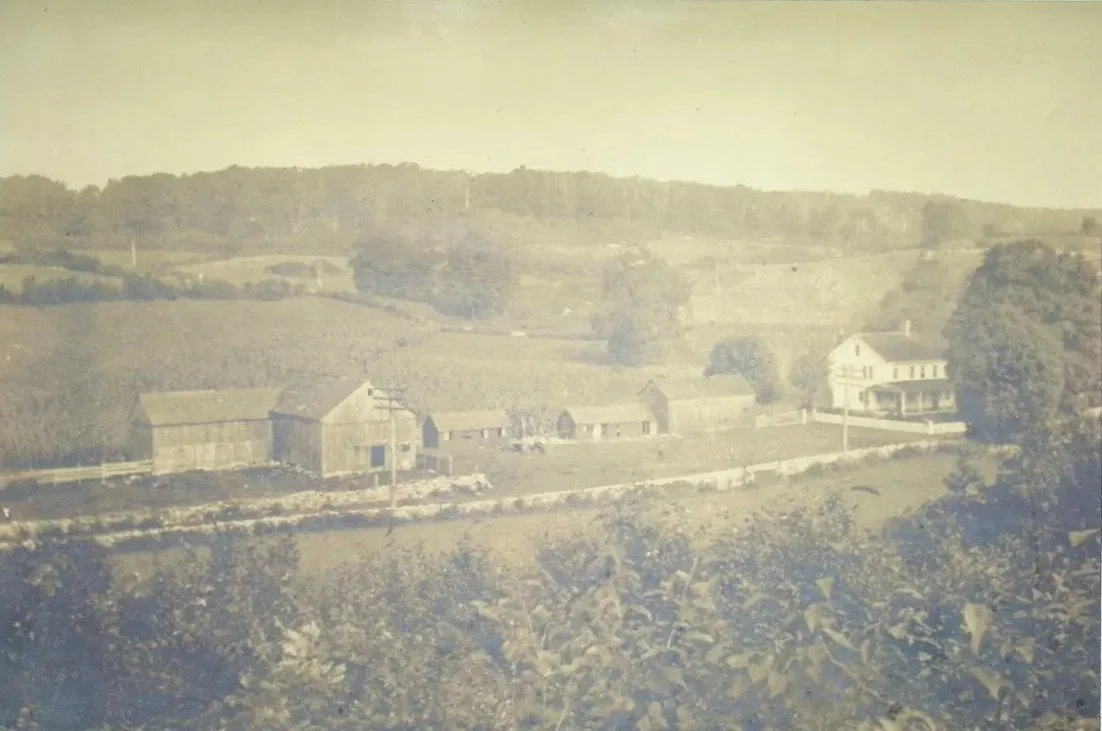
A year on a Weston farm
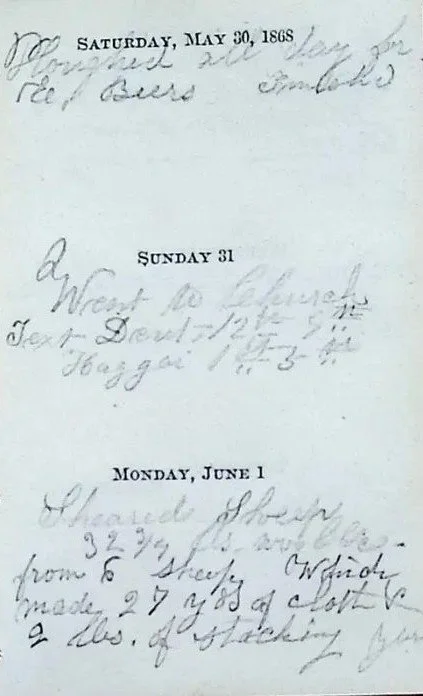
Spring: the ground
Before anything was sown, the ground was ploughed and harrowed. Ebenezer Fitch kept a diary; on Saturday, 30 May 1868, he wrote: “Ploughed all day for E. Beers.” Farmers worked for each other as well as for themselves.
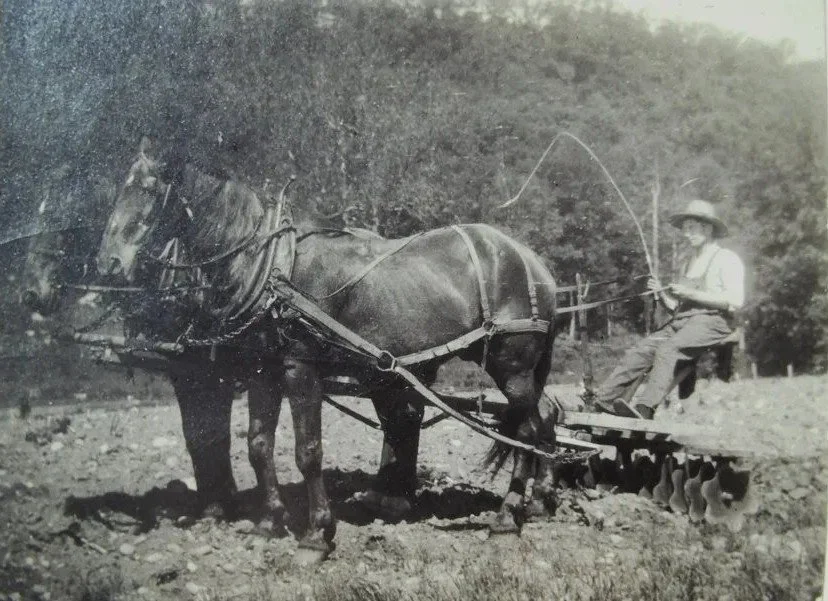
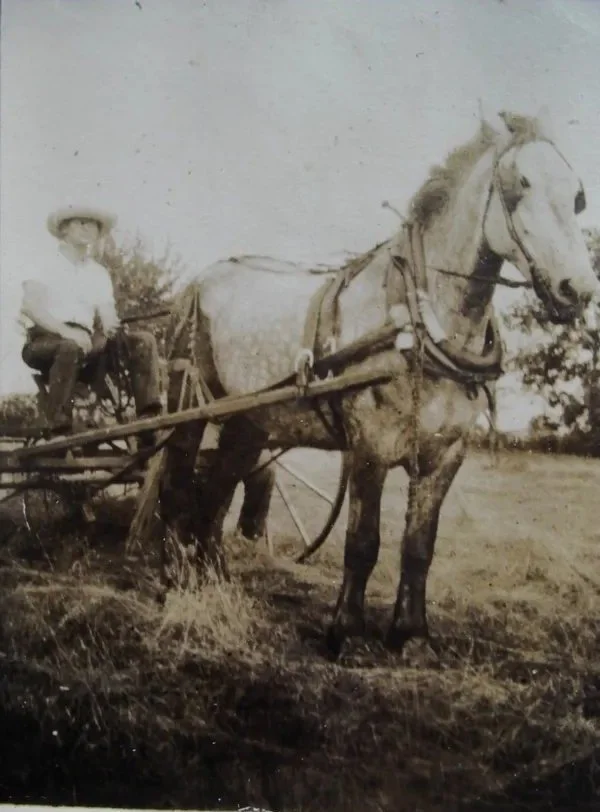
Summer: hay and grain
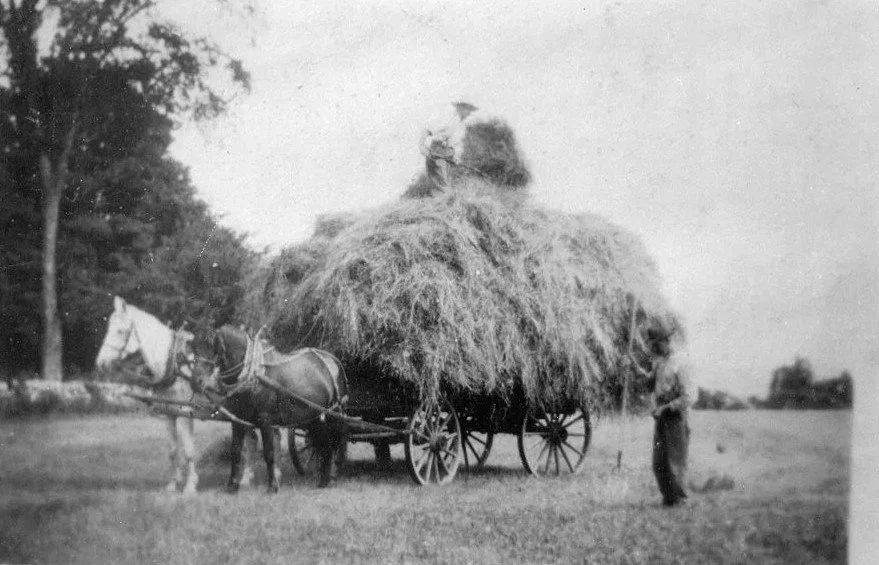
Hay fed the animals all winter, and baled hay sold well. A two-horse mower cut it, a dump rake gathered it, and wagons heaped it high for the barn. Grain was still cut by hand with a cradle, a scythe with long wooden fingers that laid the stalks in neat rows. Then came the press →



Fall: onions and apples
Onions were pulled and left in rows to dry, then packed in barrels and hauled to the landings on the coast. Apples went to the cider mill. Read the cider chapter →
No photograph of a Weston onion field has been found. Do you have one? The Onion Barn on Weston's Historic Sites tells more.
The Onion Barn →
Winter: wood
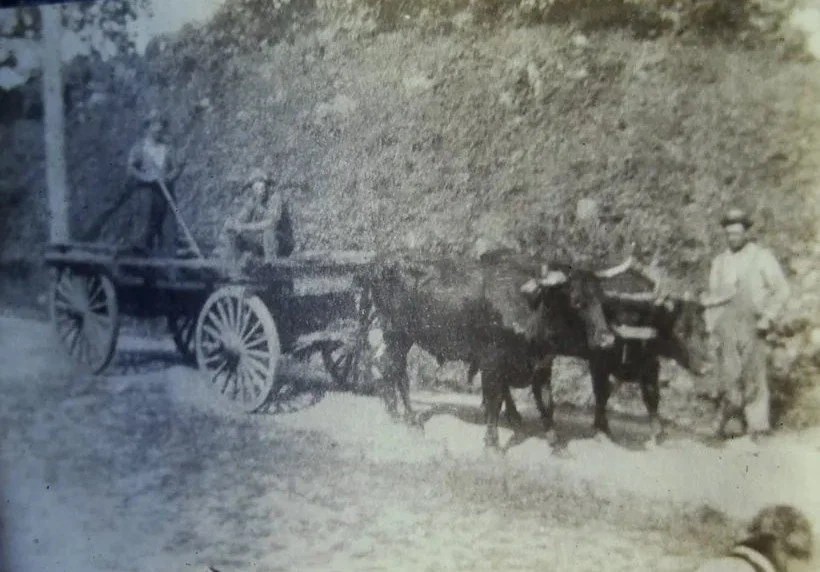
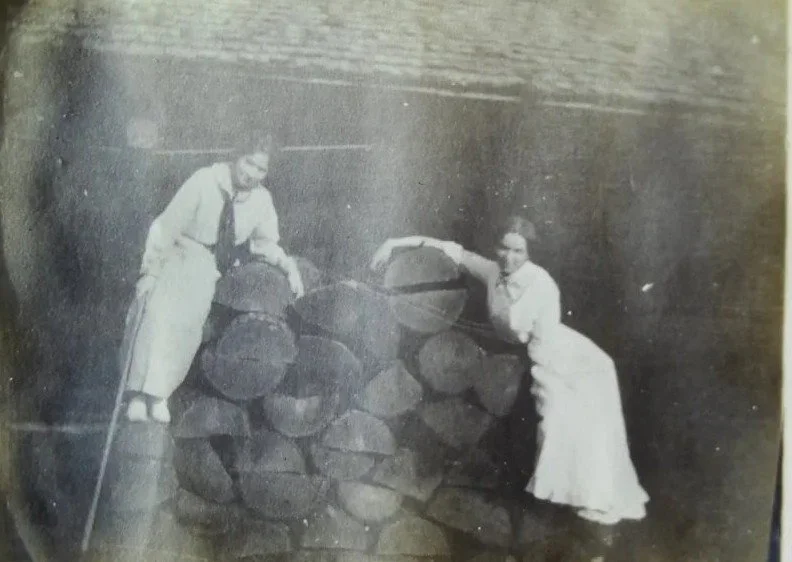
Winter was for the woodlot: firewood for the house, logs for the sawmill, railroad ties to sell. Oxen hauled the heavy loads. The Lockwoods' engine in the woodlot →
Turn it over
Historians date photographs from what's written on the back. This one, from the Coley family next door, says exactly who and when.
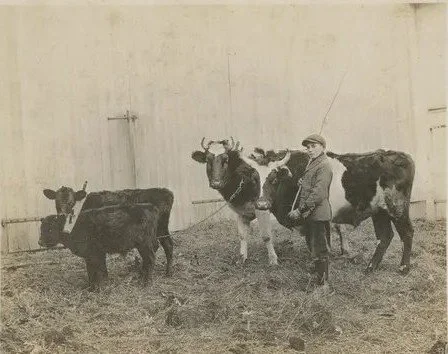
 “James Sturges Coley / Dec 25, 1916 / Weston, Ct.” He was eleven. As a man he raised oxen and took prizes with them at the county fairs.
Cows and oxen
Every farm kept a cow or two; some kept a dairy. The Fitch family ran one on Good Hill Road from 1884 until about 1930. Oxen were slower than horses but stronger, and they pulled ploughs, stoneboats and carts.
The Coleys' farm, in the Coley House exhibit →The Grange

The Grange held Weston's farm families together: meetings, lectures, suppers and contests. Cleora Coley was a member. About ninety people came out for this photograph, and not one of them is named. Do you recognize anyone? Tell us.
Waiting for you in the Coley Barn
- The Crops and Production panel
- The farming implements
- The rope and pulley: haul a hay bale up yourself
- The barn itself: built for hay and grain
Open Thursdays and the first and last Sundays of the month, 1–4 pm. $5 adults, $3 ages 5–17; under 5 and members free.
Plan your visit →Help
Become a member
Members visit the barn and the Coley House free, all year.