


Weston at Work Chapter 5 of 8
Mills on the River
Where did Weston grind its flour and saw its boards?
Before steam, every mill needed falling water. Weston's streams ground its grain, sawed its boards and cast its iron.
The Coley mill
David L. Coley built a mill on the Saugatuck on River Road. He was a distant relative of David Dimon Coley, who built the Coley House. The Coley House's own panel tells the rest:
“The Coley Mill began as a sawmill… His grandson, also named David Coley, eventually operated an iron foundry on the site with a foundry, machine shop, grinding shop, and blacksmith shop. They produced flat irons, as well as parts for firearms and iron stoves.”
The 1867 atlas marks D. L. Coley's mill pond and machine shop by the river. In 1943 a newspaper still called a River Road house “once the Coley sawmill”.

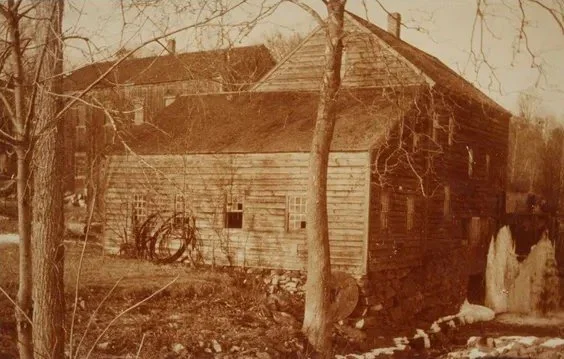
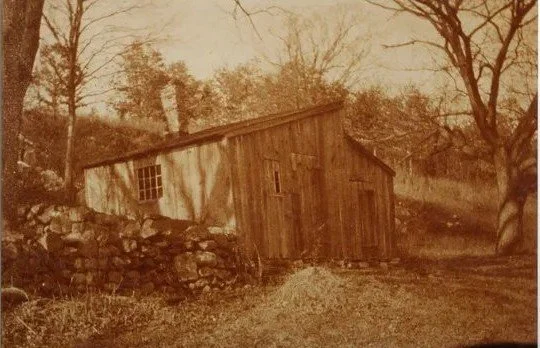
Weston History & Culture Center. Some of these may show the buildings after the foundry closed.

Gould's Mill
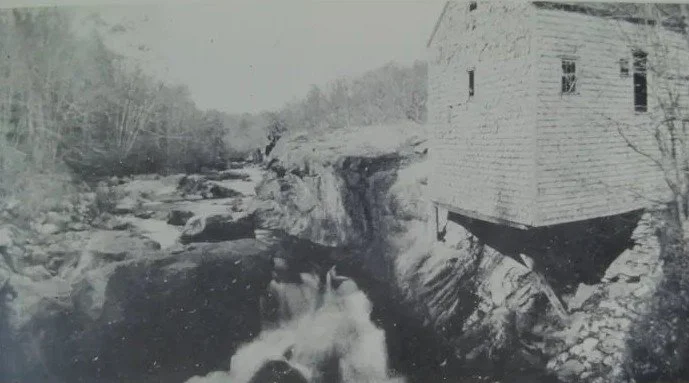
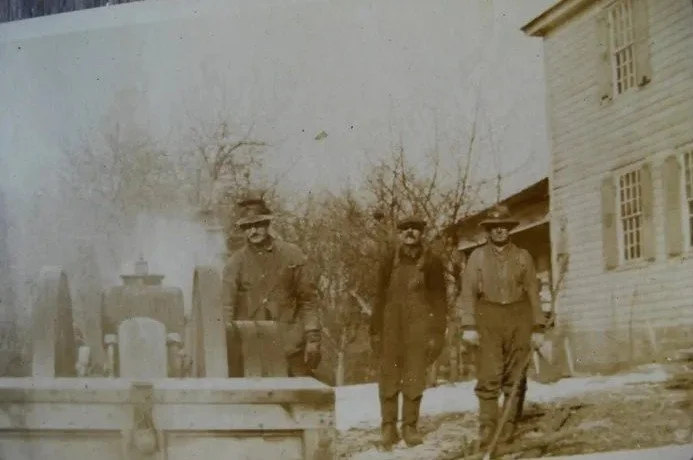
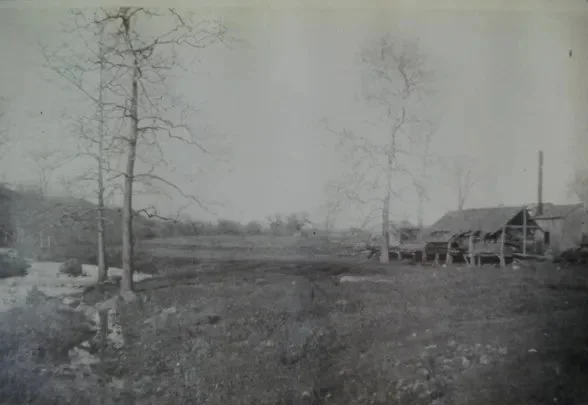
Below Valley Forge the river dropped through Devil's Glen, and Gould's mill stood right on the edge of the rocks. The photograph shows sacks of flour on the porch, the miller in an apron, and a horse and wagon waiting.
Another card of the mill is inscribed “Gould's Mill – Grist mill, Valley Forge – Weston”, with the compliments of J. Reynolds of South Norwalk. The 1867 atlas marks the place as Goulds Mills.
The family who worked at Gould's Mills, on our Cemeteries page →
Valley Forge
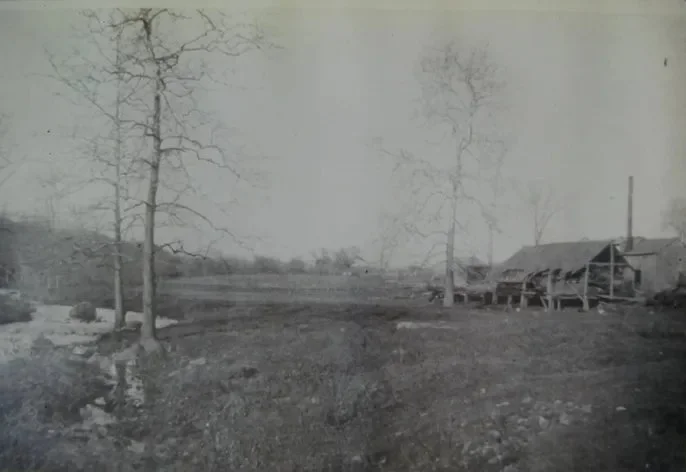
Upstream of the Glen stood a whole working village: a dam and mill pond, Hull's sawmill and foundry, the Buckley iron works, a pattern shop and a blacksmith. Iron goods, from hoes to oxcart wheels, went by horse and wagon to Westport to be shipped. The Bridgeport Hydraulic Company bought the valley in the 1920s and 1930s, and it went under the Saugatuck Reservoir.
Visit the Valley Forge exhibit →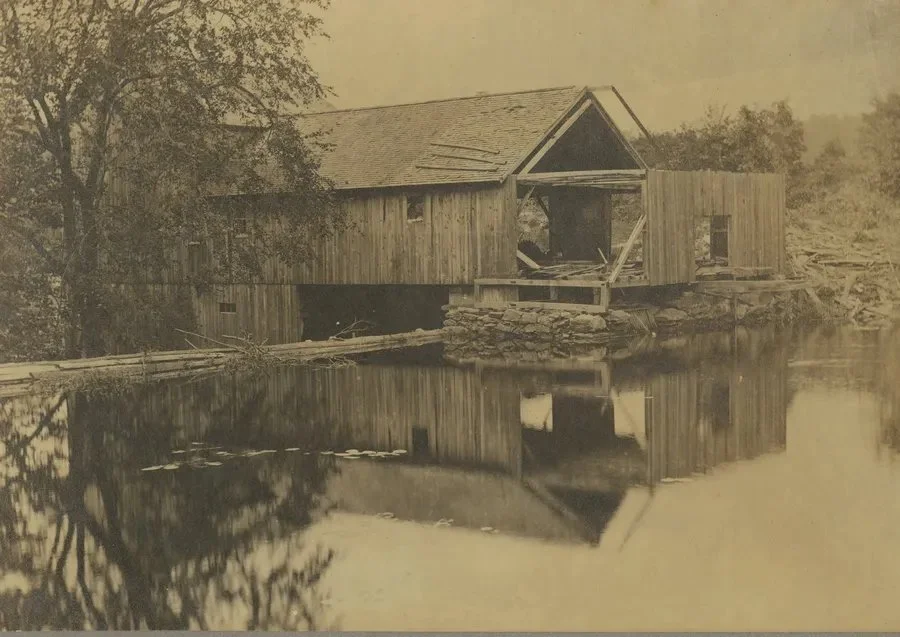
The old Davis mill
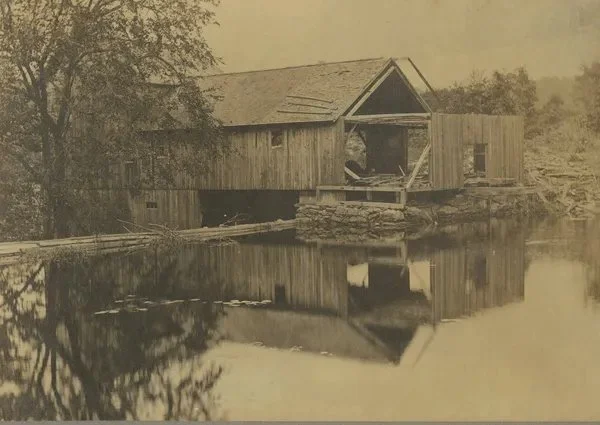
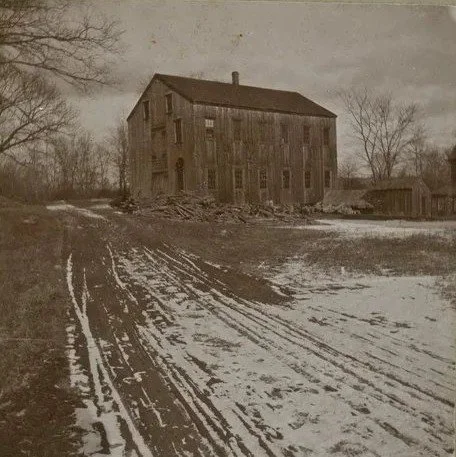
“The Old Davis Grist and Saw mill in Weston, Ct”, says the back of this print, which carries the blind-stamp of L. E. Brundage, photographer, of Norwalk. The 1867 atlas has a Davis Mills by the Weston post office; whether this is the same mill, and where exactly it stood, is one of this exhibit's open questions.

The turbine that outlived its mill
In Devil's Den, off West Godfrey Road, the Godfrey family built a mill, probably about 1780. The 1867 map shows it as a sawmill; it probably ground the neighbors' grain as well. By the 1960s only a pile of foundation stones was left by the dam, and an iron water turbine. The Historical Society's label explains why that survived:
“No pictures of this mill exist… It survived because it was probably the only large part made out of iron.”
With the turbine is Mrs. Edna Lutz, the Historical Society's secretary, after the Society restored the site.
Steam comes to the farm
A water mill had to stay by its dam. A portable steam engine could be hauled to the logs. By 1900 steam sawmills were working at farms along Georgetown Road, and by 1920 a sawmill with a tall smokestack stood on Lyons Plain Road.
Water or steam?
-

-

1903
The Valley Forge mill row
Hull's sawmill and foundry, a pattern shop and a blacksmith, now under the reservoir.
-

-

-
About 1890s–1900s
The old Davis grist and saw mill
Photographed by L. E. Brundage of Norwalk. Where exactly was it?
-

About 1780
The Godfrey mill, Devil's Den
A sawmill, probably a grist mill too. Only its iron turbine survives.
-
-
-
Waiting for you in the Coley Barn
- Tools these mills made and used, among the farming implements
- The Manufacturing panel
- Outside: the Saugatuck Reservoir over Valley Forge, and the Devil's Den trail to the Godfrey mill site
Open Thursdays and the first and last Sundays of the month, 1–4 pm. $5 adults, $3 ages 5–17; under 5 and members free.
Plan your visit →Help
Help us find out
Many of the photographs here raise questions: who is this, where was that mill? If you know, or would like to help research, tell us.